Stinging Insect Control in Fort Mill, SC
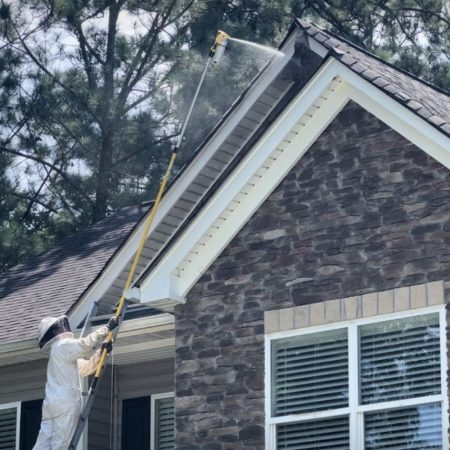
Our stinging insect control services in Fort Mill focus on safe, effective removal and treatment of active nests while reducing the chance of them coming back.
If you’re dealing with wasps, hornets, or yellow-jackets around your home, contact Bugs B Gone for fast and professional stinging insect control in Fort Mill.
On This Page →
Common Stinging Insects in Fort Mill
The most common stinging insects we see in Fort Mill include:
- Wasps– Often build open, paper-like nests under eaves, decks, and porch ceilings. They can become aggressive if their nest is disturbed.
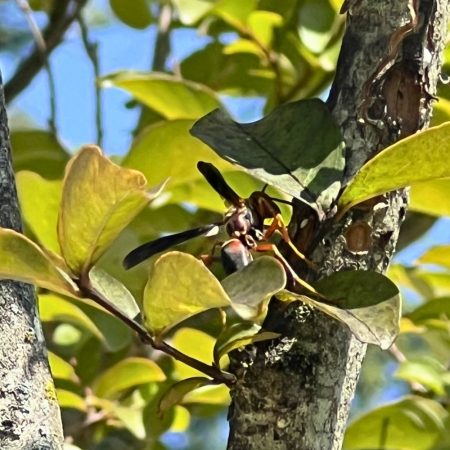
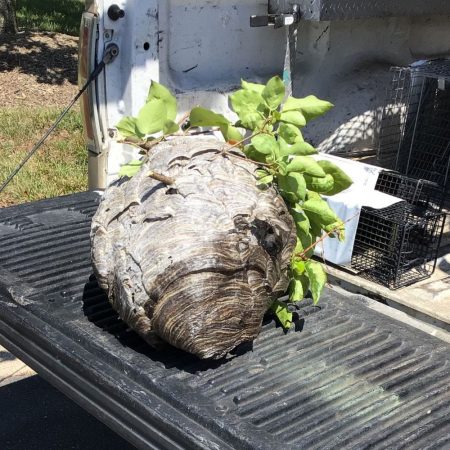
- Hornets– Larger and more defensive than most wasps, hornets usually build enclosed nests in trees or high on structures and will protect them aggressively.
- Yellow Jackets -One of the most aggressive stinging insects in this area. They commonly build nests in the ground, wall voids, or near foundations and can sting repeatedly when threatened.
Bald-faced Hornets, Paper Wasps, Yellow Jackets, and European Hornets are all common near Fort Mill. Contact us for safe and easy stinging insect nest removal today!
Professional Wasp Nest Removal in Fort Mill
When a wasp, hornet, or yellow jacket nest is active around your home, it’s important to remove it safely and completely. Our professional wasp nest removal service focuses on locating the nest, identifying the insect, and treating it in a way that eliminates the colony and reduces the chance of re-nesting in the same area.
We handle nests found in common problem spots like eaves, decks, trees, wall voids, and ground locations. Treatments are performed using products applied according to the label and in a way that keeps people and pets safe once dry. Don’t risk the sting; contact us for professional wasp nest removal near Fort Mill.
Why DIY Wasp or Hornet Removal Is Risky
Trying to remove a wasp or hornet nest on your own can go wrong very quickly. These insects are highly protective of their nests and react fast when they feel threatened. Many homeowners don’t realize that wasps, hornets, and yellow jackets can sting multiple times, and one disturbed insect can trigger the rest of the colony to attack.
A few reasons DIY removal often fails include:
- Distress pheromones released when a nest is sprayed, signaling the colony to defend
- Hidden or secondary nests that aren’t visible from the ground
- Nests inside walls or underground, especially with yellow jackets
- Store-bought sprays that agitate insects without eliminating the nest
- Increased risk of stings to homeowners, kids, pets, and neighbors
What starts as a quick spray can turn into a dangerous situation in seconds. Professional treatment focuses on eliminating the nest safely and completely, without putting anyone at risk.
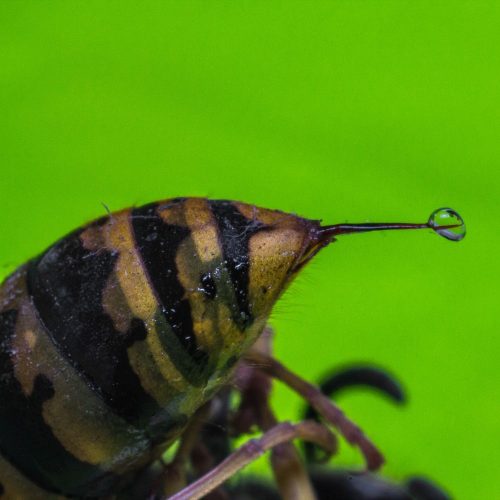
Where Stinging Insects Build Nests Around Fort Mill Homes
Stinging insects look for areas that are protected from wind and rain and close to people and food sources. Around Fort Mill homes, we most often find nests in these locations:
- Under roof eaves and soffits, where nests are hidden from view
- On porch ceilings and deck framing, especially in shaded areas
- Inside wall voids or behind siding, where activity isn’t noticed right away
- In trees, shrubs, and hedges, particularly hornet nests
- In the ground, which is common with yellow jackets near lawns, mulch beds, and walkways
- Around sheds, fences, and outdoor structures that don’t get disturbed often
Frequently Asked Questions
What’s the difference between wasps, hornets, and yellow jackets?
While they’re often grouped together, wasps, hornets, and yellow jackets behave differently and build nests in different places.
- Wasps are usually slimmer and build paper-like nests under eaves, decks, and porch ceilings. They can be territorial but are often less aggressive unless the nest is disturbed.
- Hornets are generally larger and more defensive. They build enclosed nests, often in trees or high on structures, and will aggressively protect them if threatened.
- Yellow jackets are the most aggressive of the three. They often build nests in the ground, inside wall voids, or near foundations and can sting repeatedly. They’re also more likely to be active around food and outdoor gatherings.
Knowing which insect you’re dealing with helps determine where the nest is likely located and the safest way to remove it.
Can wasps and hornets sting more than once?
Yes. Wasps, hornets, and yellow jackets can sting multiple times. Unlike honeybees, they do not lose their stinger after stinging. When one of these insects feels threatened, it can sting repeatedly and release a distress pheromone that signals the rest of the colony to defend the nest. That’s why people often get stung more than once when a nest is disturbed and why stinging insect encounters can escalate so quickly.
Should I remove a wasp nest myself?
In most cases, no. Removing a wasp nest on your own is risky, especially if the nest is active. Wasps, hornets, and yellow jackets are very protective of their nests and can sting multiple times. When a nest is disturbed, they release a distress pheromone that can cause the entire colony to attack at once. Many nests are also hidden in wall voids, under eaves, or in the ground, which makes them harder to fully remove with store-bought sprays. Professional removal is the safest way to eliminate the nest completely and avoid injuries to yourself, your family, or your pets.
How much does it cost to get a wasp nest removed?
Every situation is different, and pricing is based on what the job actually involves rather than a one-size-fits-all number.
Some things that influence the cost include:
- Size of the nest — Larger nests take more time and material to treat safely.
- Location of the nest — Nests under high eaves, in trees, or in hard-to-reach spots require more careful access.
- Accessibility — If we need to use a tall ladder or special equipment to reach the nest, that can affect the price.
- Species of stinging insect — Some insects, like yellow jackets, build nests in the ground or inside voids, which require different treatment approaches than open-air nests.
We always start with a free inspection and estimate so you know what we found and why the treatment approach costs what it does. This way, you get an honest assessment and a plan that fits the situation at your home.
Schedule Stinging Insect Removal with Bugs B Gone
If stinging insects are building nests around your home, it’s best to address the problem before it turns into a safety risk. Our team understands the behavior of wasps, hornets, and yellow jackets and knows how to remove nests safely and effectively. Every service starts with a clear explanation and a free estimate, so you know exactly what to expect.
Contact Bugs B Gone today to schedule stinging insect control in Fort Mill and make your home and outdoor spaces safe again.
Our Pest Control Service Area
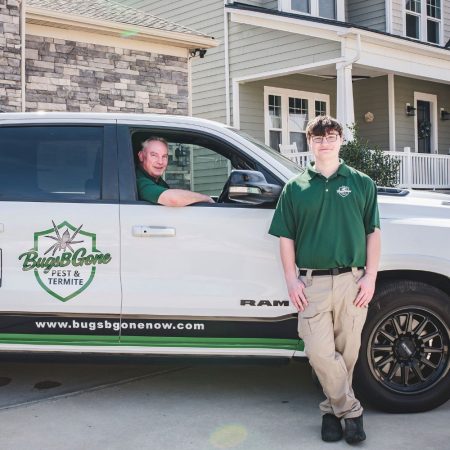
Bugs B Gone proudly serves homeowners and businesses throughout Fort Mill, Rock Hill, Indian Land, and the surrounding areas. As a local, family-owned pest control company, we’re experts in the common pest concerns around York County. If you’re looking for dependable pest control from a company that values communication and quality work, Bugs B Gone is here to help.
Proudly Serving:
- Fort Mill, SC
- Rock Hill, SC
- Indian Land, SC
- Surrounding Areas